Supplier Quality through Organizational Effectiveness
Growth overwhelms the organization. Quality suffers.
A transmission plant growing at 45% watched defect rates climb in lockstep. Fixing it required addressing both supplier performance and the organizational structures around them
The Challenge
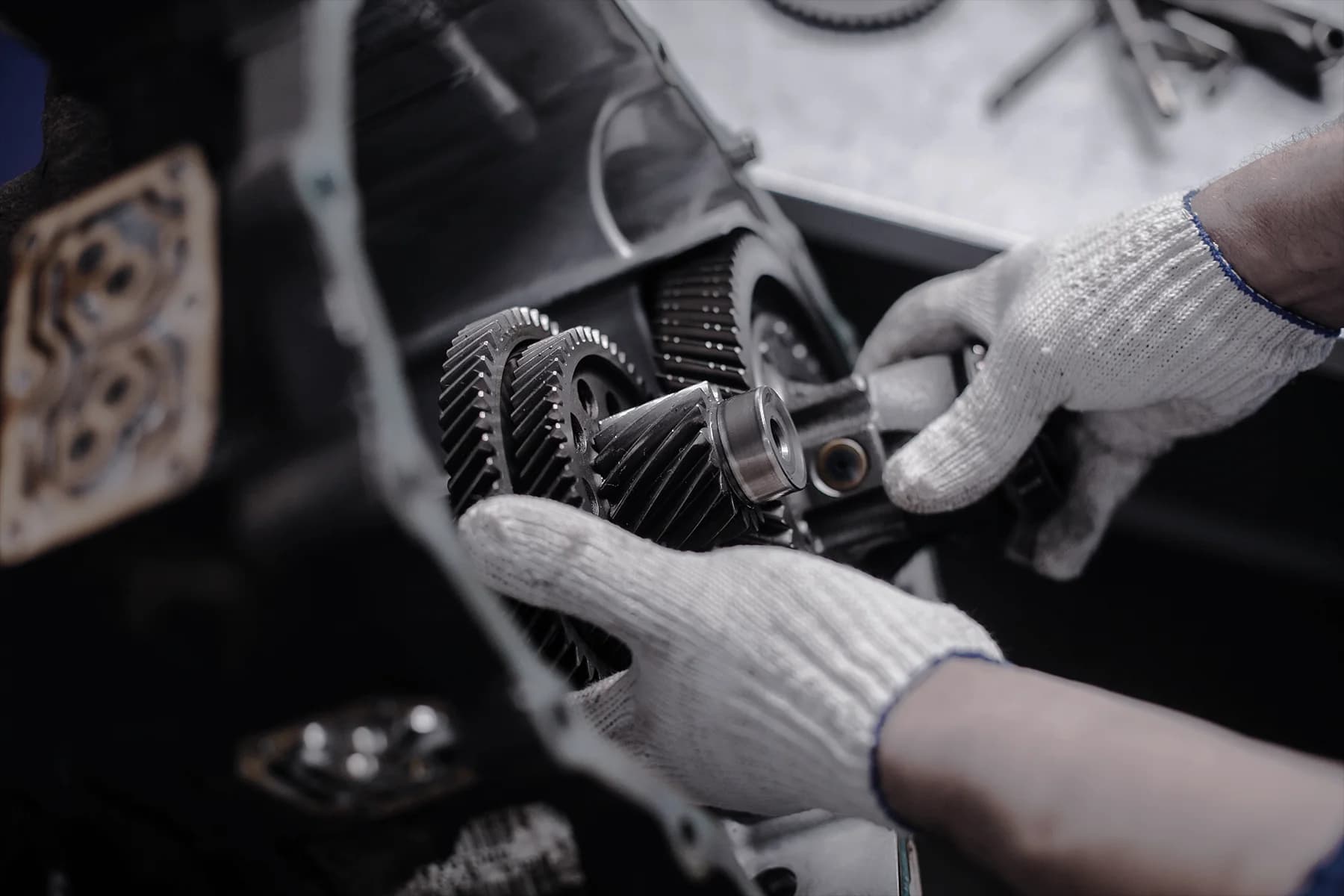
A renowned Tier 1 transmission manufacturer was scaling fast, with growth exceeding 45% in a short period. But rapid expansion exposed a structural vulnerability that no additional headcount could resolve.
Incoming part quality was deteriorating. Internal claims from production were climbing. Hundreds of open 8D tickets sat unresolved with suppliers. And the Supplier Quality team, despite working harder, was losing ground.
Leadership faced a familiar but uncomfortable question: is this a supplier problem, or an organizational one?
The root cause analysis pointed clearly inward. Decision structures were ambiguous, leading to delayed escalations and inconsistent responses. The Supplier Quality team had no effective separation between planning activities such as APQP and PPAP and live series production support — both functions were handled by the same people, and both suffered as a result. Incoming inspection processes, particularly for high-risk castings, were neither structured nor consistently applied. Data existed across the organization, but it was not being used to drive prioritization. Firefighting had replaced strategy. Cross-functional alignment between Supplier Quality, production, and logistics had become fragile.
The organization had grown. The operating model had not.
The Approach
Stop the Bleeding
Before any structural changes could take effect, operations needed to be stabilized. The immediate priority was protecting the production line. Incoming goods inspection was significantly tightened for critical components, with particular focus on castings, historically the highest-risk category. Data flows and decision-making communication were redesigned to enable faster and clearer responses to emerging issues. Sampling and inspection processes were adjusted to intercept supplier quality problems before they could reach production.
This phase restored a degree of operational control and bought time for the deeper structural work ahead.
Establish Transparency
With operations stabilized, the next step was building an accurate and unfiltered picture of the actual situation. A structured as-is analysis combined existing quality and supplier data with targeted evaluations and a full end-to-end process mapping using brown paper analysis. This revealed where time was actually being spent, which issues were recurring, and where real priorities lay.
Critically, the analysis uncovered a significant gap between where the team believed its effort was going and where it actually needed to go.
Restructure Around Reality
Using this data foundation, the organizational design was fundamentally rethought. Supplier Quality was separated into two distinct functions: a planning team responsible for APQP and PPAP, and a dedicated series production support team handling ongoing SQA activities. Each function received clear scope, accountability, and priorities. The supplier escalation process was revised end-to-end, with defined thresholds and decision authorities. The incoming inspection team was cross-trained across measurement methods, increasing both flexibility and throughput. Processes and logistics in incoming inspection, including order management for CMM measurements, were restructured for greater effectiveness.
Transparent performance dashboards gave teams real-time visibility into what mattered, reducing internal noise and enabling focused action on high-impact issues.
Build Problem-Solving Capability
Structural changes alone do not hold. The Supplier Quality team received targeted training and coaching in 8D problem-solving methods, with direct emphasis on root cause elimination rather than symptom management. The goal was building the internal capability to handle critical suppliers systematically and independently, without relying on escalation at every step.
Drive Accountability into the Supply Chain
To accelerate results and build lasting supplier relationships, joint on-site visits were conducted across the supply base, including foundries, casting processors, metal processors, and control device manufacturers. These visits served three purposes simultaneously: faster issue identification, stronger supplier accountability, and real-world coaching for internal SQA teams in dealing with critical situations.
The Results
Within one year of the transformation, every defined objective was met in full.
Internal claims from production fell by 50%. The PPM rate of purchased parts decreased by 50%. Open 8D claims to suppliers were reduced by 60%. Production disruptions from supplier issues stabilized significantly. Cross-functional alignment between Supplier Quality, production, and logistics improved across the board. And the team completed its shift from a reactive, issue-chasing posture to a structured, data-driven operating model.
Most importantly, Supplier Quality evolved from a cost center responding to crises into a strategic performance driver across the entire value chain.
Key Takeaway
When supplier quality deteriorates during periods of rapid growth, the instinct is to push harder on suppliers. But the real leverage is almost always internal.
The question executives should be asking is not why suppliers are underperforming, but whether their own organization has the structure, clarity, and capability to actually manage them. By separating planning from series support, redesigning escalation processes, building real measurement capability, and enabling teams to focus on what actually matters, Supplier Quality can transform from a reactive function into a strategic one.
That shift does not require more people. It requires a better operating model. This is what Intelligent Operations looks like in practice: combining organizational effectiveness, data-driven decision structures, and targeted capability building to turn a structural weakness into a sustainable competitive advantage.
Ready for Your Own Transformation?
Let's discuss how we can help you achieve similar results through the integration of operational excellence and AI automation.